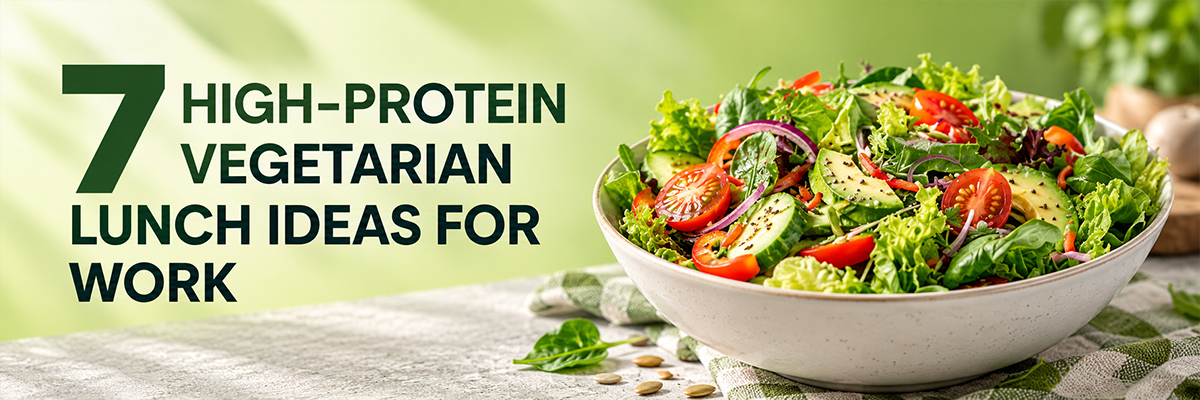
7 High-Protein Vegetarian Lunch Ideas for Work: What to Know First
1. Tofu stir-fry and rice
Tofu works especially well when it is seasoned properly. Add vegetables and rice for a complete workday lunch.
2. Rajma rice with a better ratio
Keep the comfort-food energy, but make rajma a meaningful part of the bowl rather than three spoonfuls beside a mountain of rice.
3. Chickpea and paneer bowl
Combining legumes and dairy can create a satisfying lunch with texture and variety.
4. Dal, sabzi, roti, and curd
There is nothing unfit about a familiar Indian thali. The trick is composition and portioning.
5. Soy and vegetable bowl
Soy can carry Indian, Asian, or fusion flavors, which makes it useful when you are bored with paneer.
6. Mixed-lentil khichdi with smart sides
Khichdi can be comforting and practical. Increase the lentil contribution and pair it with suitable sides rather than treating it as plain sick-day food.
7. Paneer and Vegetable Bowl
A paneer and vegetable bowl is an easy way to build a balanced vegetarian lunch. Paneer provides protein, while vegetables add fiber, vitamins, and minerals.
Start with the whole day, not one heroic meal.
Protein targets are easier to manage when you stop expecting dinner to rescue the entire day. Breakfast, lunch, snacks, and dinner can each contribute something. For a vegetarian routine, that might mean dairy or a lentil-based breakfast, tofu or paneer at lunch, curd as part of a snack, and dal or legumes at dinner. The exact foods can change. The useful habit is giving protein a deliberate place more than once a day. This also makes meals feel more normal because no single plate has to become an enormous pile of one ingredient.
The portion matters as much as the ingredient.
Seeing paneer, dal or chickpeas on a menu does not automatically make the meal protein-forward. Quantity matters. A few cubes of paneer used as garnish and a substantial paneer preparation are very different meals. The same applies to dal served as a small side beside a large portion of rice. When protein is important to your goal, look at how much space it actually occupies on the plate rather than simply checking whether a protein-rich ingredient appears somewhere in the recipe.
Carbohydrates are not competing with protein.
Fitness content often turns food into teams: protein good, carbohydrates suspicious. Real meals are more cooperative. Carbohydrates can provide useful energy for training and daily activity, while protein supports tissue maintenance and growth. A vegetarian meal can contain both. Rice with rajma, roti with dal and vegetables, or a grain bowl with tofu can all make sense depending on portions and individual needs. Removing carbohydrates automatically can make meals less satisfying and may not support someone who trains hard.
Variety prevents protein fatigue
If every fitness meal depends on paneer, even a paneer lover can eventually revolt. Rotate tofu, soy, lentils, chickpeas, rajma, other beans, curd, and dairy where suitable. Different sources bring different textures, flavors, and nutrient profiles. Variety also makes it easier to move between Indian, Asian, and fusion-style meals without feeling as though you are eating the same template every day. Long-term nutrition works better when the food remains interesting enough to look forward to.
Training still has to do its part.
A high-protein meal cannot replace resistance training when the goal is muscle gain. Food supports adaptation; training provides the stimulus. Sleep and recovery matter as well. This sounds obvious, but it is easy to spend more time optimizing lunch than improving the training program itself. A practical approach keeps the hierarchy clear: train progressively, eat enough overall, include appropriate protein, recover, and repeat. Meals should make that routine easier rather than becoming the entire routine.
When a busy workday gets in the way
The most carefully calculated nutrition plan is not useful if meetings regularly make you miss lunch. Convenience can therefore become part of performance nutrition. Having a planned meal available reduces the chance of reaching the gym under-fuelled after a day of coffee and scattered snacks. A service such as TFK can help with the logistics of a vegetarian workday meal, while the individual still needs to consider total daily intake, training, and personal requirements.
Do not turn nutrition into a spreadsheet contest.
Numbers can be useful, especially for athletes with specific goals, but everyday eating still has to function as food. Taste, digestion, budget, culture, and convenience all affect whether a plan lasts. A slightly less optimized meal that you enjoy and repeat consistently can be more useful than a theoretically perfect meal you abandon after a week. Use nutrition information to guide choices, not to make every lunch feel like an exam.
A simple self-check
At the end of a normal week, ask whether protein appeared regularly, whether meals were satisfying, whether training felt adequately fuelled, and whether the routine was practical. If the answer is repeatedly no, adjust the structure before chasing supplements or complicated recipes. If you have specific medical or performance requirements, a qualified dietitian or healthcare professional can personalize the approach more accurately than a general blog can.
Make convenience work for you.
Convenience is often treated as the opposite of healthy eating, but it can be one of its strongest supports. Grocery delivery, prepared ingredients, known restaurant choices, and meal subscriptions can all reduce the gap between intention and action. The useful question is whether the convenient option still matches your broader goal. When it does, there is no nutritional prize for making the process harder. TFK can play that role for vegetarian weekday meals by handling planning and preparation while leaving the rest of the day flexible.
What to notice after two weeks
Give a new routine enough time to become ordinary before deciding whether it works. After roughly two weeks, notice practical signals: Are you spending less time deciding what to eat? Are meals satisfying enough for your schedule? Are you enjoying enough variety? Are you wasting food or skipping planned meals? These observations can reveal whether the system fits your life far better than enthusiasm on day one. A sustainable approach should gradually require less mental effort, not more.
Keep the food enjoyable.
Nutrition advice can become so focused on optimization that taste is treated as an inconvenience. That is backwards for a routine you hope to maintain. Spices, texture, temperature, familiar comfort foods, and variety all matter. The aim is not to make every meal indulgent but to make everyday food pleasant enough that you do not spend the week waiting to escape from it. Enjoyment and structure can coexist, and that combination is often what makes consistency realistic.
How The Fitletic Kitchen Fits Into the Picture
The Fitletic Kitchen is designed for people who want vegetarian meals to be easier to fit into a busy Mumbai routine. Rather than treating "healthy" as a label, TFK focuses on freshly prepared, nutritionist-planned vegetarian meals, rotating recipes, and practical subscription management. For someone researching a high-protein vegetarian lunch, the value is less about chasing a perfect diet and more about removing repeated weekday decisions. TFK currently serves selected locations from Andheri to Dahisar, so serviceability should be checked before choosing a plan. The right plan should still match your individual goal, appetite, and total daily intake.Text in the green brand box.
FAQs
1. What is an easy vegetarian protein lunch?
Paneer, tofu, lentils, beans, chickpeas, and soy can anchor a lunch.
2. Is rajma rice suitable for a balanced lunch?
Yes, depending on the ratio, preparation, and portions.
3. Do I need a protein shake with lunch?
Not necessarily.
4. Can TFK help with protein-focused lunches?
TFK offers vegetarian meal options designed around different nutrition and fitness goals.
5. How do I know whether a high-protein vegetarian lunch is right for me?
Start with your goal, schedule, food preferences, appetite, and budget. If you have a medical condition or specific nutrition requirement, seek personalized advice from an appropriately qualified healthcare professional
Conclusion
High-protein vegetarian lunch does not need to look like a bodybuilding meme. Familiar food can work perfectly well when protein is deliberately given enough space on the plate. The Fitletic Kitchen can help make that routine easier with freshly prepared vegetarian meals designed for busy Mumbai schedules, while the final choice should still reflect your personal goals and needs.